On this page
A caller says your savings are at risk and offers to help protect them. They may start as a technical support agent, pass you to a supposed bank officer, and introduce someone claiming to be a government investigator. The proposed solution is the danger: transfer the money, withdraw cash, buy gold, or hand assets to a courier. End the conversation and contact the bank independently before moving anything. If a collection is imminent or someone is threatening you, contact local police and prioritise personal safety.
Older adults and their families need a practical response that protects the person as well as the records. Blame and embarrassment can make that response harder.
What the 2025 IC3 report says about older complainants
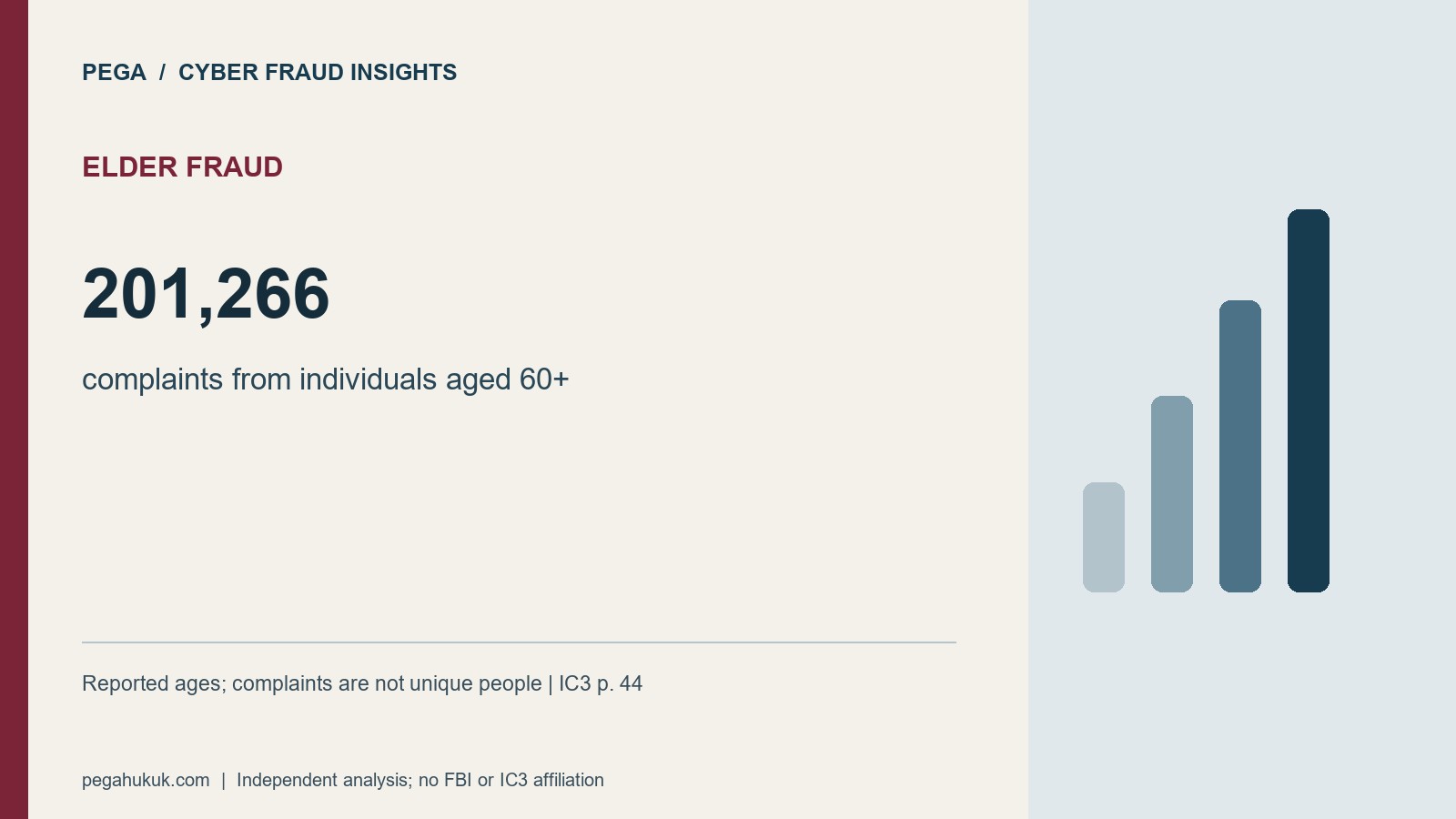
The FBI’s IC3 recorded 201,266 complaints filed by people aged 60 or over, with approximately $7.748 billion in reported losses in 2025. Its headline figures show complaints up 37% and losses up 59% from 2024. Investment fraud accounted for $3,519,296,354 in the 60+ section, while government impersonation accounted for $413,206,251. Tech/customer support losses were approximately $1.04 billion. These are reported losses in a US complaint system, not a global estimate. Source: FBI IC3 2025 Annual Report, pages 44–48.
The report also identifies approximately 725 gold-courier complaints and $311.8 million in losses overall; that figure is not limited to the 60+ cohort. Source: report, page 12. The important distinction is between the story used to gain trust and the method used to remove assets.
How a support call becomes an asset-transfer scam
The FBI describes a layered approach in which criminals impersonate technology support, a financial institution and a government official in succession. Victims may be directed to buy precious metals, sometimes from a genuine dealer, before a courier collects them. A collection passcode can be part of the deception rather than proof that the courier is legitimate. Source: FBI warning on cash and precious-metal couriers.
Several apparently separate people may therefore be repeating one false account of events. A transfer confirmation establishes that money was sent; it does not establish that the supposed investigator had authority. Likewise, a real gold purchase does not validate the explanation for handing that gold to someone else.
| What you are told | What needs independent checking |
|---|---|
| Your account has been hacked | Ask your bank through its genuine contact route whether there is an actual account alert. |
| Money must move to a protected account | Ask the bank to confirm the exact beneficiary and purpose. Do not rely on the caller’s transfer instructions. |
| A courier will safeguard cash or gold | Stop the proposed handover and contact police independently. A passcode or official-looking document is insufficient. |
| The investigation must remain secret | Speak to a trusted person and contact the claimed institution separately. |
There is no need to stay on the line to challenge the caller or collect a confession. A family should not arrange its own encounter with a courier.
If a payment or handover has already happened
1. Tell the financial institution exactly what occurred
Contact the bank or payment provider promptly using an established number or app. Give the amount, date, payment reference, recipient and explanation used by the caller. If you made the transfer yourself under deception, say so; do not describe it as an unauthorised account login unless that also occurred.
The IC3’s elder-fraud guidance recommends asking the bank about a wire recall and hold harmless or indemnification documentation. The institution must assess what is available for the payment concerned. Asking quickly may help, but recovery depends on the route, timing and location of the assets. Source: IC3 elder-fraud response guidance.
2. Address any access the caller obtained
Tell the bank if the caller saw account screens, received security codes, installed remote-access software or obtained identity documents. These are separate exposures from the payment itself. Use a trusted device for urgent account protection and seek suitable technical help for the affected device. Keep a record of the steps taken.
3. Report a physical collection promptly
If cash or gold was collected, record the place, time, description, vehicle details if already known, and any collection messages. Preserve existing doorbell or security footage where available. Give this information to police; do not follow the person or try to recover the property yourself. If goods have been ordered or shipped, inform the dealer or carrier of the suspected fraud and ask what can still be stopped.
Build one clear evidence record
Separate the bank transfer, purchase and collection. A genuine dealer may have supplied the gold without knowing the scammer’s plan, and an account holder’s name alone does not establish criminal involvement. A useful record shows what each document proves and where the trail is incomplete.
| Part of the sequence | Useful records |
|---|---|
| First contact | Phone number, email, pop-up address, message thread and the identity claimed. |
| Device access | Software name, approximate access times, instructions received and any existing support-session details. |
| Bank transfer or withdrawal | Statement, transaction confirmation, branch or ATM details, recipient and reference. |
| Precious-metal purchase | Dealer invoice, payment details, item descriptions, delivery information and serial numbers if recorded. |
| Collection | Messages, location, date and time, claimed courier identity, collection code and existing footage. |
| Response | Bank case number, police report reference and a dated account of what each institution was told. |
Keep original records and distinguish recollection from a contemporaneous document. Do not publish identity papers, account details or accusations on social media in an effort to identify the caller.
How family members can help without taking over
A useful opening is: “Let us check this with the bank together before anything else happens.” Ask what the caller said would happen if the person refused. That can reveal a threat or false claim that has kept the conversation secret.
Help list the transfers and find genuine contact information. Explain each protective step and involve the account holder where possible. Do not impersonate them to the bank or assume family status gives access to their private accounts. If practical support or formal authority is needed, ask the institution about its process.
Some approaches use a supposedly distressed relative or a cloned voice. Our AI and voice-cloning fraud guide covers independent verification. If the money request came through an online relationship, the romance scam evidence guide addresses that different trust-building pattern.
Reporting and the risk of a second scam
Report to the relevant local authorities and the affected institution. IC3 is a US reporting channel, and cross-border circumstances may require other local routes; see reporting cyber fraud from outside the United States. A report can support assessment and investigation, but does not itself freeze assets or guarantee repayment.
Keep the same verification discipline if someone later says the money has been found. Independently check the person, organisation and proposed service. A demand for another payment to release recovered funds needs particular scrutiny. Our recovery scam guide explains common impersonation and advance-fee claims.
Data note: age reporting to IC3 is optional, and a complainant may report for a business. The report’s 60+ support tables contain a small inconsistency between pages 45–46 and 47–48; this article uses the consistent rounded figure of approximately $1.04 billion. The full report guide explains the scope and limitations.