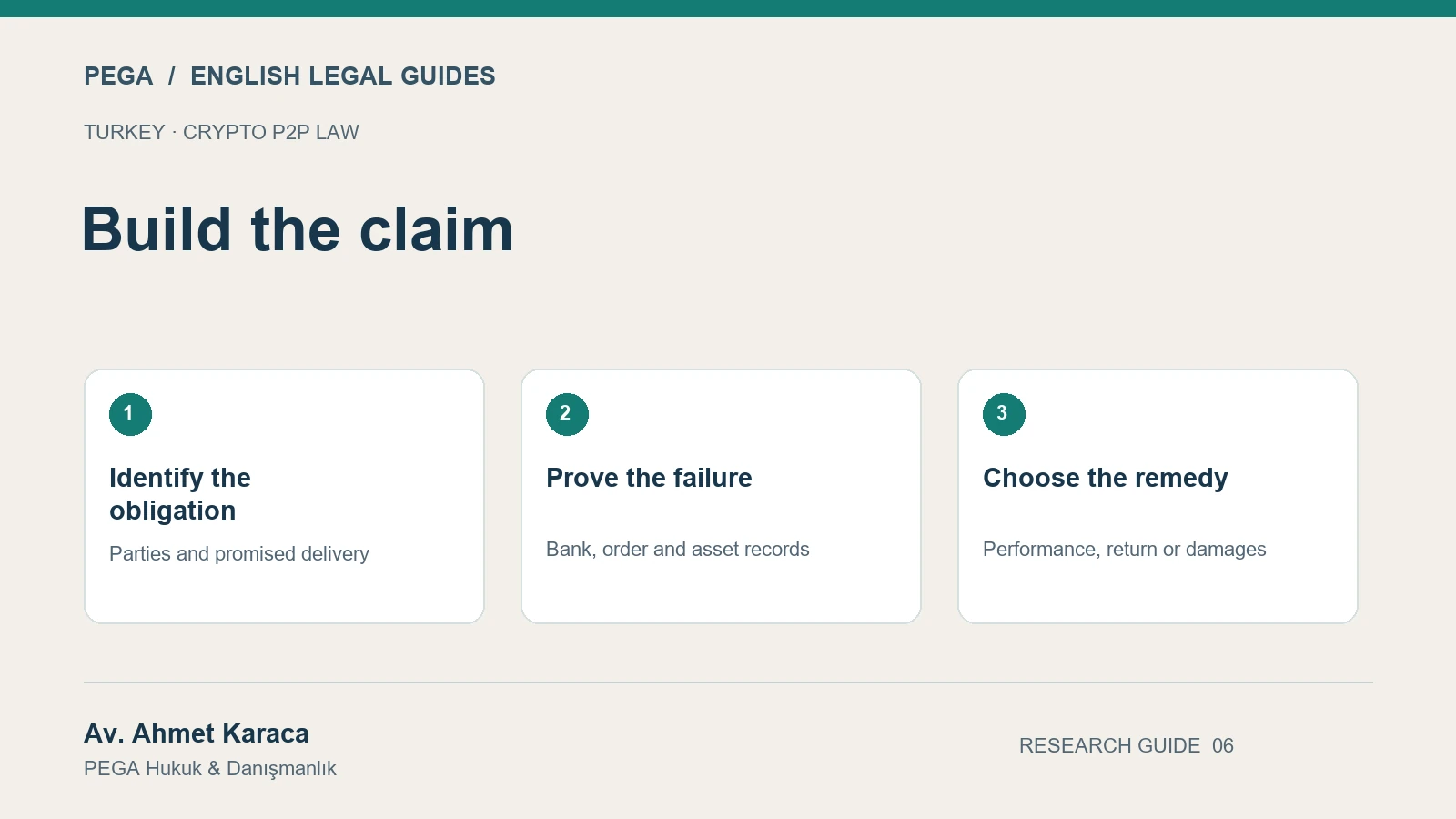
A failed P2P trade can leave several possible claims: delivery of crypto, repayment of money, return of an unjustified receipt, compensation for a breach, or recovery from a fraudster. Choosing the right claim requires identifying the actual obligation and the person who owed it.
“The order was completed” and “I was defrauded” are important starting statements, but neither determines every civil issue. A platform’s internal appeal also answers a narrower question than a Turkish court deciding contractual rights, ownership or damages.
Start with the failure, not the asset label
| Situation | Question to establish | Evidence that matters |
|---|---|---|
| Fiat paid; crypto never released | Was payment made as agreed, and who owes delivery or repayment? | Order, payment terms, credited transfer, cancellation and appeal record |
| Crypto released; fiat not actually received | Was the receipt false, the transfer pending, or the payment reversed? | Bank-native record, release event, chat and platform decision |
| Money received from a non-buyer | What authorised the payment and the recipient’s retention of it? | Payer instructions, buyer identity, authority and delivery evidence |
| Wrong network, address or token | Who specified and confirmed the delivery details? | Original instructions, destination, network, contract and transaction status |
| Platform prevented access or released escrow | What obligation did the identified platform entity undertake or breach? | Applicable terms, decision history, custody and internal ledger |
The parties can disagree about more than one row. A buyer may prove bank payment while failing to prove that the receiving company was the contracting seller. A seller may show a blockchain transfer while failing to connect the destination to the claimant’s authorised instruction.
What counts as delivery of USDT?
Read the agreement before deciding what evidence proves performance. Delivery might mean crediting the buyer’s platform balance, releasing escrow, or sending a particular token on an agreed network to an agreed address. These are different events. Where performance is an internal platform credit, there may be no public transaction hash.
For an on-chain obligation, verify the network, token contract, amount after fees, destination, transaction status and any agreed confirmation condition. A matching ticker is insufficient: counterfeit tokens can use the same display name. Sending a genuine token to the wrong chain or an unrelated address does not automatically perform the agreed obligation.
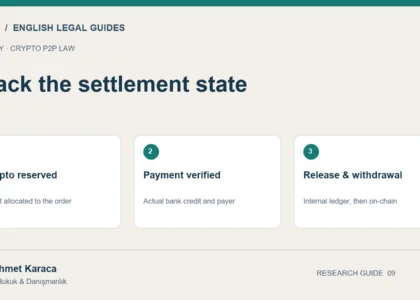
Equally, a withdrawal delay after a valid platform credit may be a separate dispute between the buyer and the platform. It should not automatically be charged back to the P2P seller. The escrow and platform-appeals guide shows how to locate the failure in the settlement sequence.
Contract, unjust enrichment and tort
A contractual claim asks what the parties agreed and which obligation was breached. An unjust-enrichment claim asks whether a person received a benefit without a legally sufficient basis at the claimant’s expense. A tort claim concerns a wrongful act, fault where required, damage and causation. The factual overlap does not make these theories interchangeable.
For example, a deceived payer may have no P2P contract with the bank recipient. Framing the whole case as a simple buyer-seller delivery claim can therefore miss the real relationship. Conversely, where a valid contract governs the receipt, an unjust-enrichment allegation must address that claimed legal basis rather than ignore it.
Alternative legal characterisations may be appropriate, but the factual account must remain consistent. Identify the payment, the recipient, the instruction, the promised counter-performance and the actual benefit. Do not recover the same loss twice by counting both the original fiat payment and equivalent crypto as independent losses without explaining whose property each was.
A court example: asserting conversion is not proving authorised delivery
In Istanbul 16th Commercial Court, E.2022/852, K.2024/767, 21 November 2024, the claimant transferred USD 700,000 following an investment-related deception. The receiving company relied on a crypto-conversion explanation. The court found that the asserted mandate and delivery to the claimant had not been established and ordered restitution on unjust-enrichment grounds.
The decision is particularly useful for distinguishing a transaction narrative from proof. A company needs to connect the actual claimant to the instruction and performance it relies on. An unexplained wallet movement or general statement that the business sells Tether does not supply that link.
This is a first-instance ruling; the text records an appeal route and later finality has not been verified here. Its underlying transactions also predated the 2024–2025 crypto regulatory framework. Historical observations in the case about regulation should not be repeated as current law. The case illustrates reasoning within its facts, not automatic liability for every recipient of a disputed P2P payment.
When the payer and seller both claim to be victims
The triangle-fraud pattern creates competing positions. The payer says the transfer resulted from deception. The seller says they surrendered their own crypto in return. The fraudster may have received the crypto while never appearing in the bank flow.
The analysis should separate the seller’s criminal responsibility from the legal basis for retaining the payer’s money. Lack of proof of fraudulent intent does not automatically decide restitution. Nor does a restitution demand itself prove the seller knowingly assisted the fraud. Evidence of authority, receipt, benefit and any loss of enrichment requires individual examination.
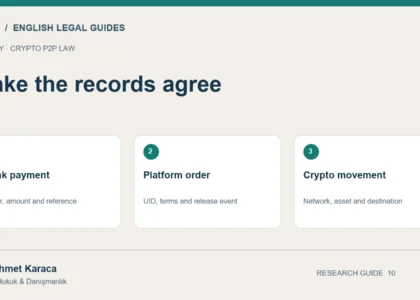
Preserve both sides’ contemporaneous communications. A later declaration from the supposed buyer may be unreliable if that person controlled the deception. An order ID should be joined to the bank reference and internal ledger, not simply placed in an annex without an explanation.
Interim attachment and preservation are not final judgment
If assets may disappear, the need for interim protection should be considered promptly. The appropriate measure depends on the claim and asset: provisional attachment of a monetary claim, an injunction concerning a disputed right, criminal seizure, and preservation of electronic records are distinct tools with different conditions.
In a 6 March 2023 decision of Antalya Regional Court of Appeal, 11th Civil Chamber, published as document 868787100, the court restored provisional attachment in a dispute involving a claimed Tether-conversion arrangement. It considered the connected communications and payment evidence sufficient for the provisional standard. The anonymised public text does not disclose a usable case-number pair; none is invented here.
The decision concerned interim protection, not a final determination that the claimant must win the merits. Its evidential standard and the security ordered in that case should not be converted into universal percentages or requirements for other files. The important point is to show why the particular records support the requested interim measure.
Deadlines for implementing, maintaining or challenging an interim measure can be short and depend on the procedural route and notices. A general article cannot calculate them from the date of a P2P trade. Record the actual service and enforcement events and review them immediately.
Which Turkish court or dispute route?
Jurisdiction depends on the relationship, the parties’ capacities and the claim. A crypto label alone does not automatically assign a case to a commercial court. Whether a consumer relationship exists requires examination of the purpose of the transaction and the parties’ roles; professional or business activity may change that analysis. General civil, commercial and consumer routes must be distinguished.
Also check territorial jurisdiction, the place of performance, the defendant’s identity and address, any foreign element and the effect of contractual forum or arbitration provisions. Mandatory mediation may apply to the relevant category of dispute. A criminal complaint or platform appeal does not automatically satisfy a civil prerequisite.
The pleading route must reflect current procedural law. In particular, Law No. 7589 changed civil-procedure provisions in 2026, including the treatment of claims whose amount is not initially determined and transitional rules. Older online pleading templates should not be reused without checking the filing date and current provisions.
Name the correct defendant
Identify the bank recipient, contracting seller, platform entity, custodian and alleged wrongdoer separately. A global trading brand can operate through different entities. A help-desk response from one company does not establish that it owes the disputed performance under another company’s terms.
Under the crypto framework introduced by Law No. 7518, platform-customer disputes remain subject to general legal rules, and public authorisation does not provide a state guarantee for the trade. The statute also contains specific service-provider responsibility and customer-contract provisions. Those need to be connected to an identified provider’s act or omission.
A bank is not automatically liable because it processed a fraudulent customer’s payment. A platform is not automatically liable for every off-platform promise. Equally, describing a service as “only a marketplace” does not itself dispose of an alleged breach of its actual custody, order or complaint-handling duties.
Calculate the claim without hiding the assumptions
Prepare a ledger of paid amounts, crypto received, fees, reversals, refunds, seized or returned sums and remaining loss. State the currency of each obligation. Distinguish the contractual price from a later market value and explain the legal basis for seeking either. Record the dates used for any exchange-rate conversion.
Hypothetically, if a buyer paid TRY 100,000, recovered TRY 25,000 through the bank and received no crypto, the unrecovered principal is TRY 75,000 before any separately justified interest or other claim. Claiming the original TRY 100,000 without disclosing the return would overstate the remaining principal. If crypto was partially delivered, value and performance must be analysed under the actual obligation rather than silently ignored.
Loss of profit, price movement, financing costs and non-pecuniary loss each require their own legal and evidential basis. The mere existence of a missed market opportunity is not proof that the defendant owes every subsequent price difference.
A refund or settlement needs a transaction-specific record
Before repayment, verify the recipient and check for an existing reversal, seizure or platform reimbursement. Document the original payment and order, the amount and currency being returned, treatment of fees and partial performance, and which civil claims the agreement addresses. Where multiple claimants exist, a bilateral payment may not settle the others’ rights.
Do not promise that a private settlement will necessarily terminate a criminal investigation. Do not require false statements or deletion of evidence. If a restriction is already imposed by an authority, private agreement does not automatically authorise release or movement of the affected assets.
The file to prepare before a demand or claim
Keep the agreement and applicable terms; a participant and entity list; the complete payment and order records; delivery evidence; communications showing authority; the appeal history; a loss calculation; and all official notices. Mark the documents still held by the platform or bank. The P2P evidence-file guide provides the corresponding fields.
Where fraud is suspected, use the asset-recovery guide alongside the civil analysis. Where an account is restricted, consult the bank-freeze guide. The main English P2P law guide connects those routes while keeping their legal tests separate.